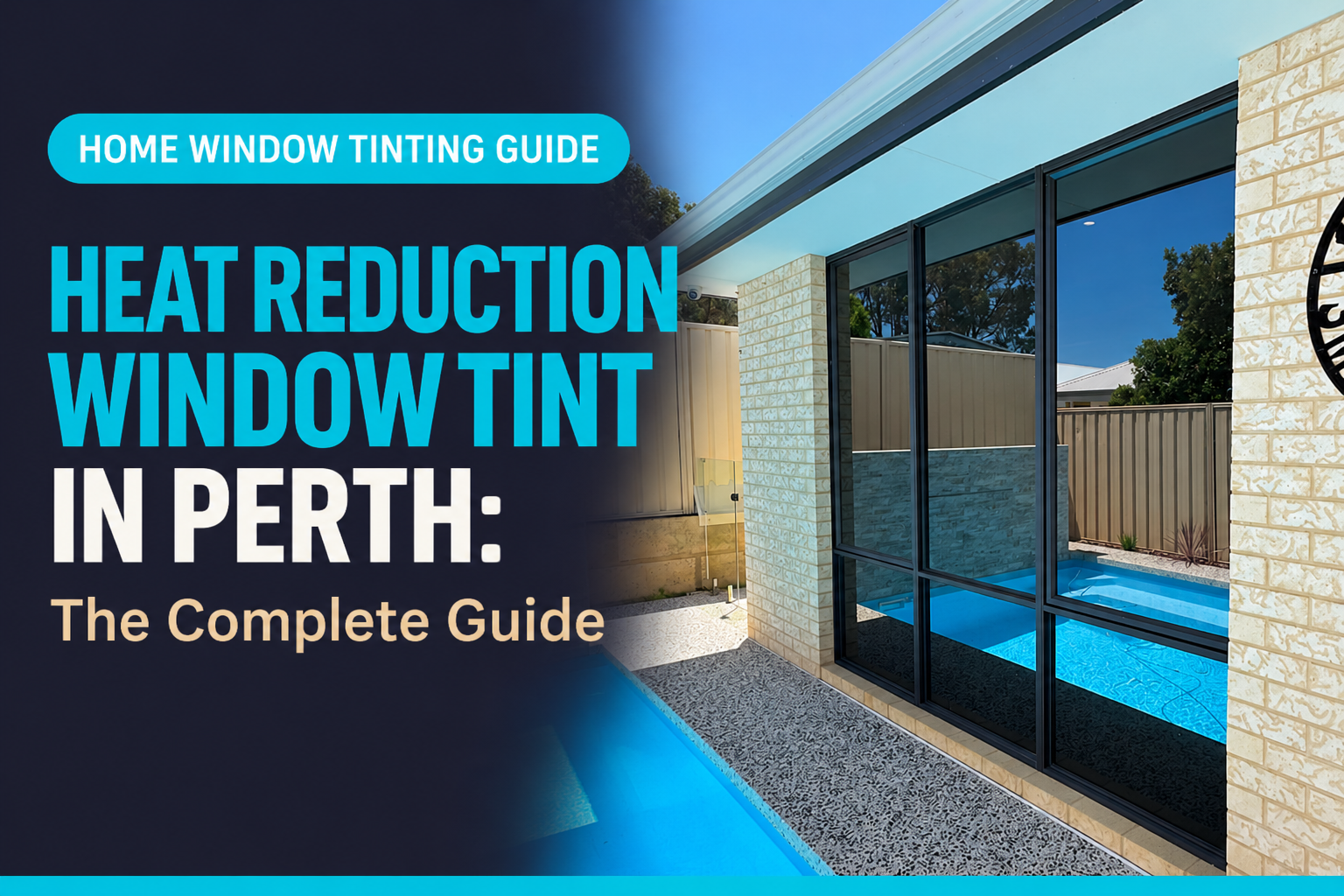
Heat Reduction Window Tint in Perth: The Complete Guide
Written by Blake McIver, owner and master installer at Coastal Tints
Heat reduction window tint works by stopping a big share of the sun's energy before it gets through your glass. Quality solar control films cut heat by up to 83% and block up to 99% of UV, while still letting light in and keeping your view. In Perth, the biggest difference comes from tinting west and north-west facing glass, and the right film depends on your glass type.
Key takeaways
Windows are the weak spot. Up to 87% of a home's heat gain comes through them in summer.
Solar control film reflects or absorbs the sun's heat at the glass, so less of it reaches your rooms, your couch and you.
You don't need dark tint to cut heat. Some modern films reject a lot of heat while staying light and clear.
West-facing glass is the first place to start in Perth. That's where the hard afternoon sun hits.
Your glass type (annealed, toughened, double glazed, Low-E) decides which films are safe. Always get it checked first.
What's in this guide
Why do Perth homes get so hot?
Because the sun comes straight through your glass. Walls and roofs have insulation. Most windows don't. The Australian Government's Your Home guide on glazing says up to 87% of a home's heat gain can come through windows, and up to 40% of its heating energy can be lost through them in winter.
Perth makes it worse. We get long, hot summers and a brutal afternoon sun that sits low in the west. Your Home explains that when the sun hits glass more directly, like in the late afternoon on west-facing windows, the heat coming through is at its highest.
That's why so many people tell us the same thing. The lounge room is fine until 2pm, then it turns into an oven. The air con runs flat out, the blinds stay shut, and the couch you paid good money for is slowly fading in one spot.
And it costs you. Researchers writing in The Conversation note that around 40% of household energy use in the average Australian home goes on heating and cooling. Stop the heat at the window, and your cooling has less work to do.
How does heat reduction window tint work?
Sunlight carries energy in three main forms: the light you can see, infrared (the heat you feel on your skin), and UV (the part that fades floors and burns skin). Heat reduction film is a thin layer applied to your glass that blocks a big share of the infrared and almost all of the UV, while letting a chosen amount of visible light through.
It does this in one of two ways:
Reflecting the heat back outside before it enters the room. This is how reflective and dual-reflective films work.
Absorbing the heat into the film and glass, where much of it is then released back outside. This is how non-reflective films work, including non-reflective ceramic.
Either way, the result is the same thing you feel straight away: the glass stops radiating heat at you. Stand next to a tinted west-facing window at 4pm and the difference is obvious.
Your Home measures how much heat from direct sun gets through a window with a number called the Solar Heat Gain Coefficient (SHGC), from 0 to 1. The lower the number, the less sun heat gets in. A good solar control film brings that number down.
Not sure how much heat your windows are letting in? Blake will check them on site.
What types of heat reduction film are there?
There are five main types of heat reduction film for homes. Each one suits different glass, rooms and looks.
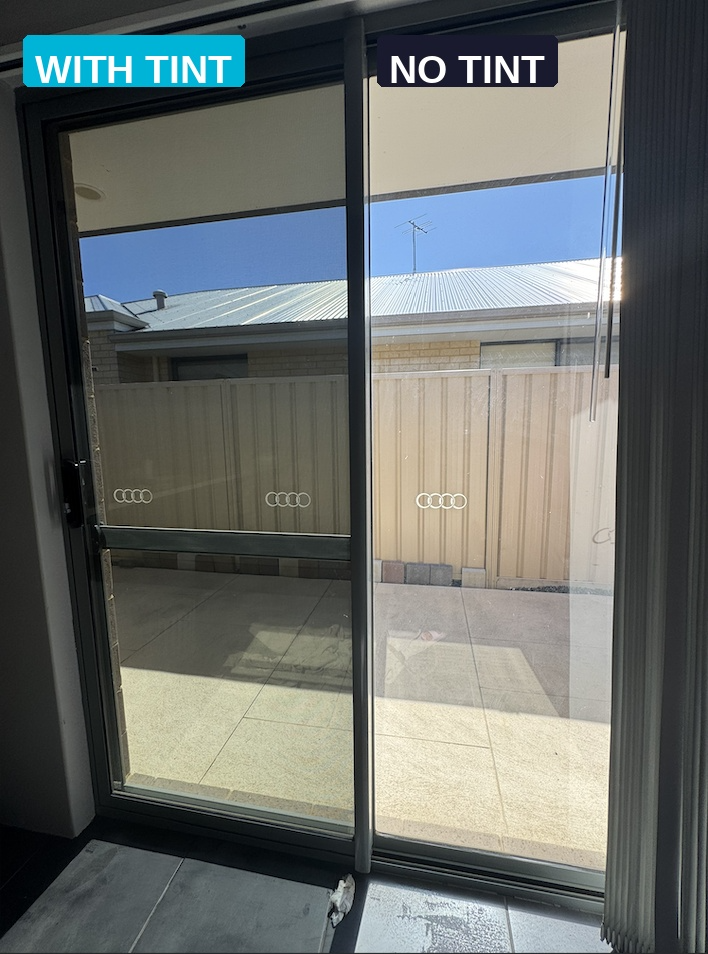
1. Reflective and dual-reflective film
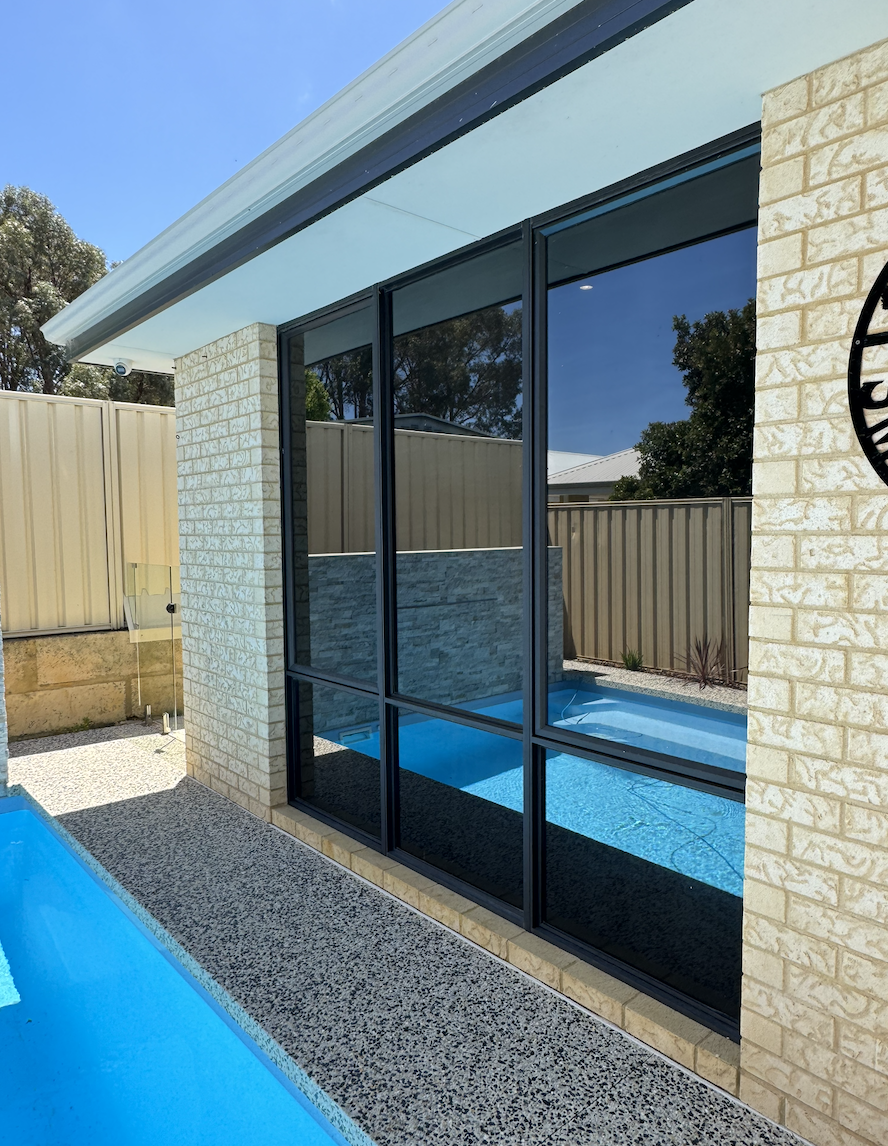
These films have a mirrored look from outside and are some of the strongest at bouncing heat away. Dual-reflective films are more reflective on the outside than the inside, so you get strong heat rejection without the room feeling like a mirror at night. They're a favourite for west-facing glass and beachfront homes that cop strong sun and glare. They also give good daytime privacy.
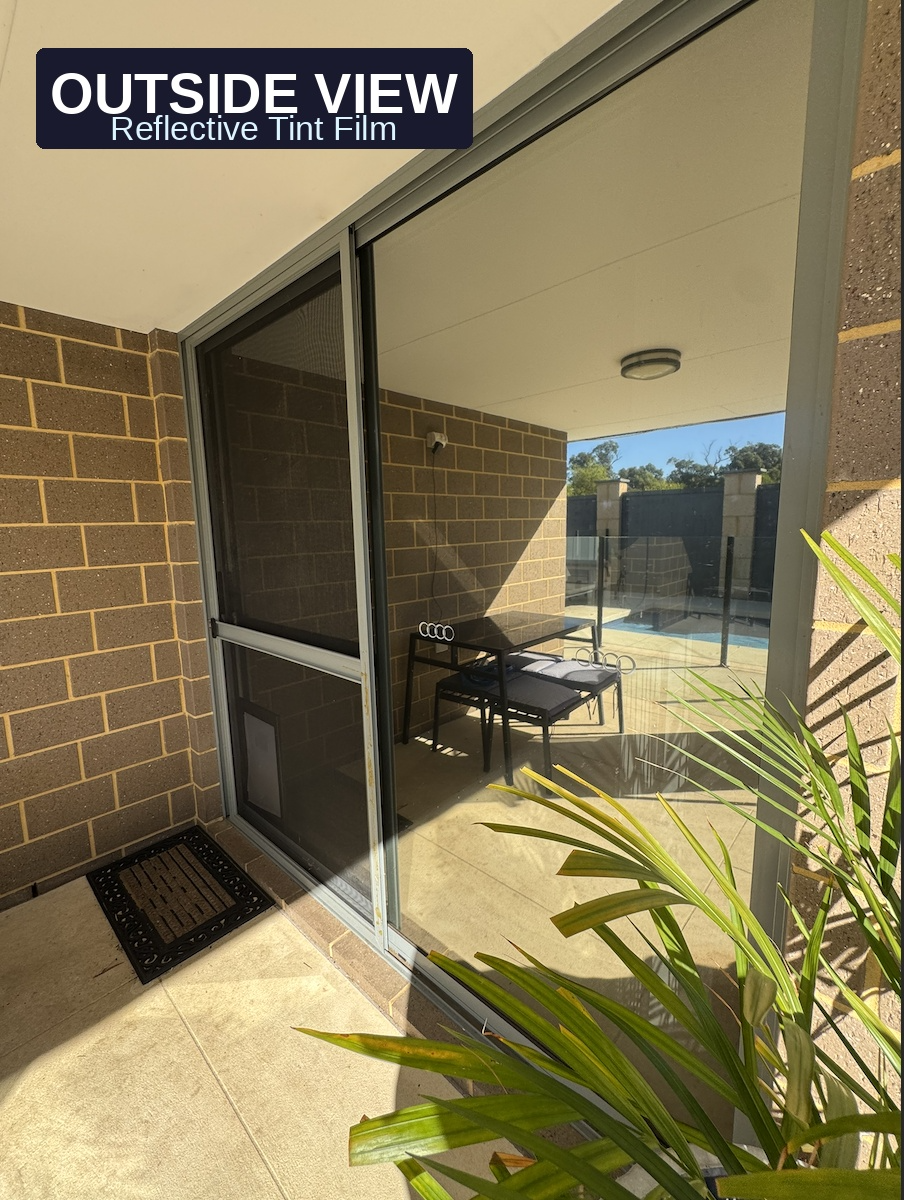
Best for: west and north-west glass, beachfront homes, rooms that cook in the afternoon.
Watch out for: the mirrored look from the street, which some people love and some don't.
2. Dark non-reflective (charcoal) film
These are standard, non-ceramic films with a smoky, darker look from outside. They cut heat and glare, give good daytime privacy, and cost less than ceramic.
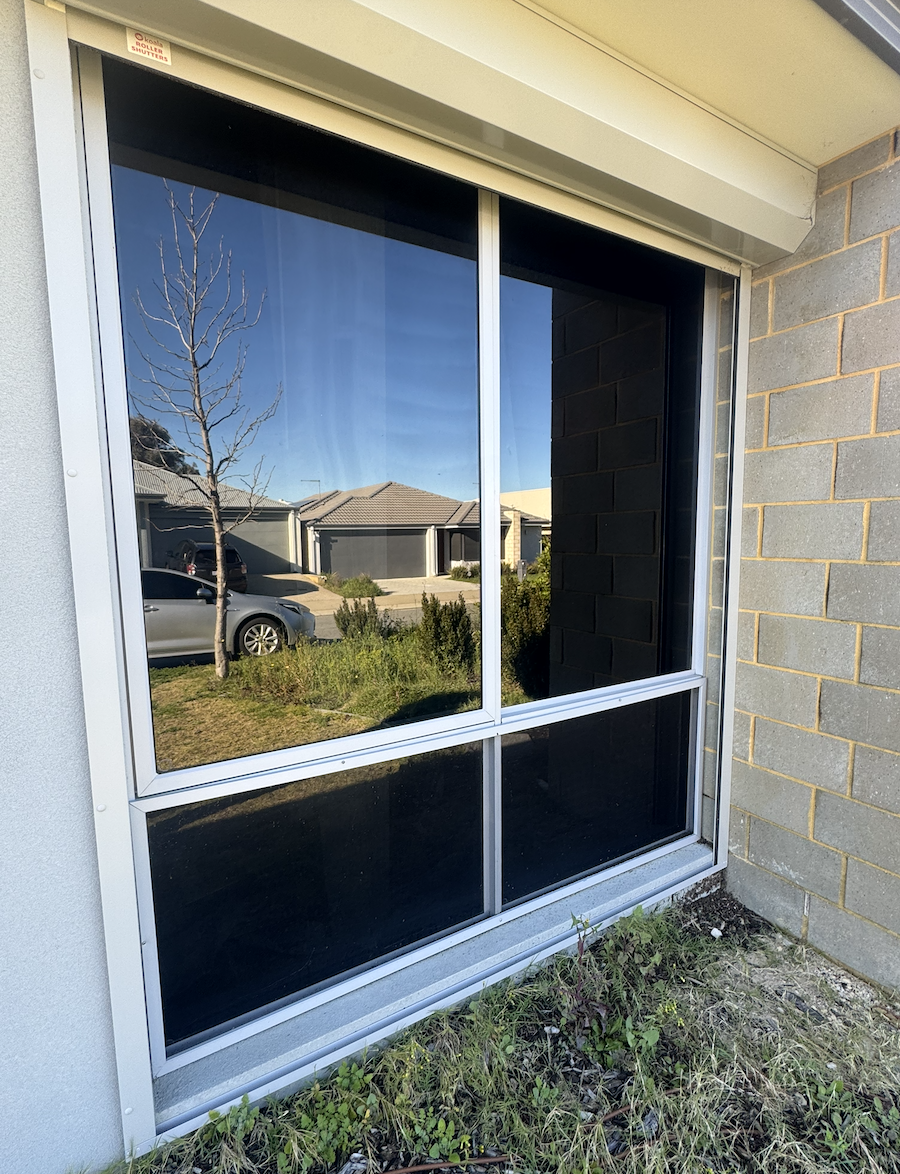
Best for: bedrooms and media rooms where cutting glare matters as much as heat.
Watch out for: they absorb heat into the glass, so they are not safe on every glass type. More on that below.
3. Ceramic (nano-ceramic) film - reflective or non-reflective
Ceramic films use tiny ceramic particles to block heat, and they come in both reflective and non-reflective versions. Reflective ceramic gives you a mirrored finish with extra heat rejection. Non-reflective ceramic keeps a natural, darker look from the street with no mirror effect. Both are clear to look through, don't interfere with phone or Wi-Fi signals, and hold up well in strong sun.
Best for: people who want strong heat control and a choice of finish, mirrored or natural.
Watch out for: they usually cost more than standard films.
4. Low-E (insulating) film
Low-E films work like insulation for your windows. They look almost clear, cut solar heat in summer, and in winter they reflect warmth back into the room instead of letting it escape through the glass. That's why they're often called insulating window film, and why they're the best film for winter. SolarGard says Ecolux 70 improves the insulation of a standard single pane of clear glass by around 40%, while still rejecting 52% of the sun's energy in summer, letting through 68% of visible light and blocking 99%+ of UV.
Best for: year-round comfort. Cooler rooms in summer, warmer rooms in winter, and better window insulation without changing how your windows look.
Watch out for: Low-E is one of the most expensive films you can buy. It's made with thin precious metal layers, built into the film so finely you can still see straight through it. Those layers are what bounce heat back where it came from, and they cost a lot more to make than standard tint. Heat rejection is also lower than the strongest reflective films, so it's not the pick for the hottest west-facing glass on its own.
5. Exterior solar film
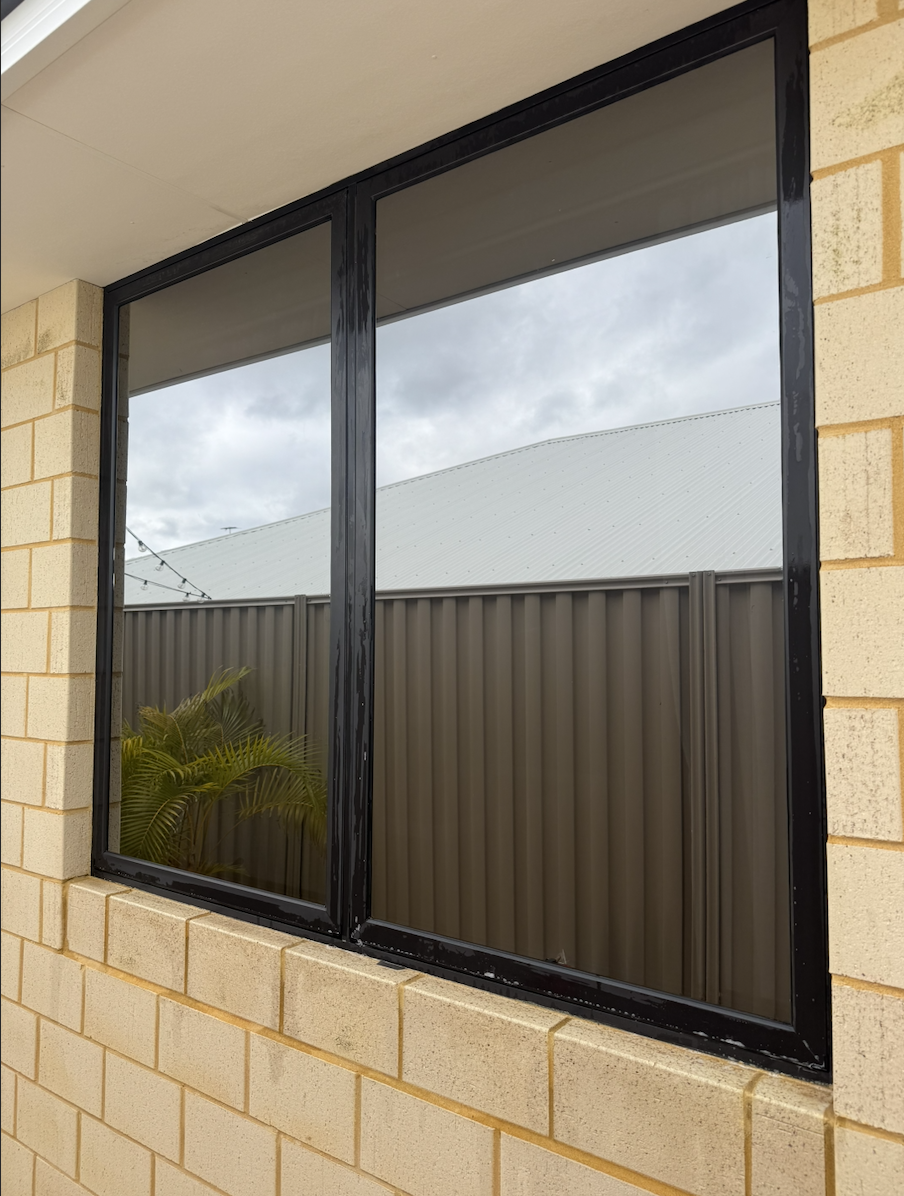
Some glass can't be safely tinted on the inside. Double glazed windows are the main one, because film on the inside can trap heat between the panes and stress the unit. Exterior solar film goes on the outside of the glass instead, so it stops the sun's heat before it ever gets into the glass. It's built to handle the weather, and it's the safe way to get heat reduction on glass that can't take an internal film.
Best for: double glazed windows and any glass that can't be tinted on the inside.
Watch out for: it needs to be a proper exterior-rated film, installed by someone who knows which glass needs it.
Heat film comparison: which one suits you?
On a phone, swipe the table sideways to see every column.
Film type | Heat cut | Look | Day privacy | Winter help | Best for |
|---|---|---|---|---|---|
Reflective / dual-reflective | Very high | Mirrored | Strong | Some | West glass, beachfront homes |
Dark non-reflective | Medium to high | Smoky, dark | Good | Some | Bedrooms, media rooms |
Ceramic | High | Mirrored or natural | Medium to strong | Some | Strong heat control, choice of look |
Low-E | Medium | Almost clear | Low | Best | Year-round comfort |
Exterior solar film | High | Depends on film | Depends on film | Some | Double glazed glass Annealed glass Laminated |
Want to see these films on your own windows before you decide?
How much cooler will my house be?
The films we install cut heat coming through the glass by up to 83%, depending on the film you choose. That's the honest way to put it, because the real-world result depends on a few things: which film, which way the glass faces, how much glass you have, and what else is going on in the house, like insulation and shading.
What you'll notice most:
The glass stops radiating heat at you. Sitting near a tinted west window in the afternoon feels completely different.
Hot spots even out. The room that used to be way hotter than the rest of the house stops standing out.
Your air con works less hard, because it's not fighting the sun coming straight through the glass.
Glare drops, so you can actually watch TV or work on a screen near the window.
We won't promise you a specific temperature drop or a dollar figure off your power bill, because every home is different and anyone who promises a number without seeing your house is guessing. What we can do is show you the film specs for your glass and tell you honestly what to expect.
Will heat tint make my house dark?
No, not if you choose the right film. This is the most common worry we hear, and it comes from older, cheap tints where the only way to cut heat was to go dark.
Modern films are rated by VLT (visible light transmission), which is the percentage of daylight that gets through. Heat films come in a wide range of light levels, from quite dark to almost clear, so you can choose how bright you want the room to stay. Low-E films like Ecolux 70 let through 68% of visible light while still cutting solar heat.
A lot of clients actually find their house feels brighter afterwards. Before the tint, the blinds were shut all afternoon to keep the heat out. After, they can leave them open.
Is heat film safe on my glass?
It is, as long as the film is matched to the glass. Get this wrong and the glass can crack. This is the part that DIY kits and some installers skip.
When film absorbs heat, the glass gets hotter. Your Home notes that industry guidelines must be followed to avoid thermally induced cracking, and recommends using an accredited window film installer.
Annealed glass (standard glass in many homes) can crack under dark absorbing films in strong sun. On annealed glass we use reflective films, which bounce heat away instead of soaking it into the glass.
Toughened glass handles heat stress much better and opens up more film options.
Double glazed windows can trap heat between the panes. On double glazing we use exterior solar film only, applied on the outside of the glass.
Low-E glass/or coat already has a coating, and some films aren't compatible with it. This needs checking before any quote. We can also use exterior solar film, applied on the outside of the glass.
That's why Blake checks your glass type on every job before recommending a film. If someone quotes you heat film over the phone without asking what glass you have, ask them how they know it's safe.
Not sure what glass you have? We check it on site as part of your free quote.
Which windows should I tint first?
If you're on a budget, you don't have to do the whole house at once. Start where the sun hits hardest:
West and north-west glass. This is the afternoon sun, the hottest part of a Perth day. Big sliding doors and living room windows on this side make the biggest difference.
North glass, especially big panes with no eaves or shading over them.
East glass, if mornings are the problem, like a kitchen or bedroom that's already hot by 9am.
South glass rarely needs heat film in Perth, though it may still be worth tinting for UV, glare or privacy.
Your Home also points out that east and west windows are the hardest to shade, because the sun is low in the sky in the morning and afternoon. Eaves don't help much there. Film does.
Does window tint help in winter too?
Yes, especially Low-E films. Remember, up to 40% of a home's heating energy can be lost through windows. Low-E film reflects heat back into the room, so your heater has less to make up.
Blake's honest take: window film is the next best thing for insulation after double glazing. Double glazing does have real advantages, like noise reduction and the best overall performance. But film costs a fraction of replacing your windows, and it goes on in a day.
Heat film vs blinds vs replacing windows
Blinds and curtains stop some heat, but by the time the sun hits them, the heat is already inside the room. They also block your light and view.
External shading like awnings is very effective, but costs more and changes the look of your home.
Replacing windows with high-performance glazing gives the best result, but it's a big renovation with a big price tag.
Window film stops the heat at the glass, keeps your view and light, goes on in a day, and costs far less than new windows. For most Perth homes, it's the best value fix.
What does heat reduction tint cost in Perth?
It depends on the film, the size and number of windows, your glass type, and access. Our current pricing for home tinting starts from $85 per square metre installed, with a 3 square metre minimum, as listed on our website. Specialty films like ceramics or for double glazing and Low-E glass cost more.
The only way to get an exact number is an on-site measure. The glass size shown on house plans is usually a bit different from the real glass, so we always measure in person.
Why Perth homeowners book Coastal Tints for heat reduction film
Coastal Tints is owner operated. Blake McIver founded the business and does every install himself. No subcontractors, no junior installers. He has more than 10 years of hands-on experience in New Zealand and across Australia, including Melbourne and Perth, and is an authorised dealer and installer of SolarGard and UltraGard films.
We're based in Mandurah and cover the whole Peel Region with no call-out fees, plus the Perth Metro area. We come to you with film samples, check your glass type, and send you a clear quote. No pressure, no hard sell.
As one of our clients, Geovane A., put it after his install: "I've already noticed a big difference in heat reduction and privacy inside the house, which makes a huge improvement in comfort."
Sick of your house turning into an oven every afternoon?
Book a free on-site quote. Blake will check your glass, show you real film samples in your own light, and tell you honestly which film will keep your home cooler.
Heat reduction window tint FAQ
Does window tint really keep a house cooler?
Yes. Quality solar control film cuts the sun's heat coming through the glass by up to 83%, depending on the film. You feel it most near west-facing glass in the afternoon, where the glass stops radiating heat into the room and hot spots even out.
What is the best window tint for heat reduction in Perth?
It depends on your glass and the look you want. Reflective and dual-reflective films give the strongest heat rejection for west-facing glass. Ceramic films come in reflective and non-reflective versions, so you can get strong heat control with or without a mirrored look. Low-E films help in both summer and winter, and exterior solar film is the option for double glazed windows. Your glass type has to be checked first to make sure the film is safe.
Can I still see out of heat reduction tint?
Yes. Heat films are designed to keep your view. From inside, the view looks slightly tinted, a bit like wearing sunglasses. Lighter films and Low-E films are almost clear.
Will heat tint lower my power bill?
It can help, because your air con doesn't have to fight the sun coming through the glass. Around 40% of household energy in the average Australian home goes on heating and cooling. How much you save depends on your home, your film and how you run your air con, so we don't promise a set amount.
Can you put heat film on double glazed windows?
Yes, with exterior solar film. It goes on the outside of the glass, so heat is stopped before it gets into the unit. Putting the wrong film on the inside of double glazing can cause heat stress and damage the unit. That's why the glass type needs checking on site first.
How long does heat reduction film last in the WA sun?
A quality, professionally installed film lasts many years. Residential interior installs with Coastal Tints carry a lifetime manufacturer warranty for the original owner, plus our own workmanship warranty. Clean it with a soft microfibre cloth and mild soapy water, and avoid ammonia-based cleaners.
How long does it take to install?
Most homes are done in a day. The film then takes about 2 to 4 weeks to fully cure. Small water pockets or a slight haze during that time are normal and clear up on their own.
Ready for a cooler home this summer?
Every home is different. Blake will come to you, check your glass type, and show you real heat reduction film samples on your own windows, so you can see the difference before you decide. We cover Perth to Mandurah and the Peel Region in Western Australia, with no call-out fees across the Peel Region.
Got a quick question first? Contact us
Sources
Australian Government, Your Home: Glazing
The Conversation: On hot days, up to 87% of heat gain in our homes is through windows
Coastal Tints: Services, pricing and warranty and Terms and Conditions
SolarGard: Low-E films Environmental Product Declaration (Ecolux 70)