Privacy Window Tint for Homes in Perth: What Actually Works
Written by Blake McIver, owner and master installer at Coastal Tints
Privacy window tint for Perth homes works by making the outside of your glass harder to see through than the inside. Reflective and one-way films give you strong daytime privacy while keeping your view and natural light. Frosted and decorative films give you privacy day and night. No standard tint stops people seeing in at night with your lights on.
Key takeaways
Reflective (one-way) film gives strong daytime privacy, but it flips at night when your lights are on inside.
Frosted and decorative film is the only film option that gives privacy 24/7, but you lose the clear view through that glass.
Dark non-reflective (charcoal) tint gives good daytime privacy, a little less than reflective, with a softer look from the street. Like reflective film, it doesn't give privacy at night.
Your glass type (annealed, toughened, double glazed, Low-E) decides which films are safe to use. Check it before you buy anything.
Most Perth homes end up with a mix: reflective film on street-facing living areas, frosted film on bathrooms and front door glass.
What's in this guide
Why is privacy the number one reason Perth homeowners tint their windows?
Because feeling watched in your own home is exhausting. When we ask clients why they called, heat comes up a lot, but privacy is the one that gets people to actually pick up the phone. Our two best-performing ads ever were both about privacy: one about neighbours being able to see in, and one about a tinted sliding door.
It usually sounds something like this. You've got a new build with big street-facing windows. Or the house next door is close enough that you can see into each other's lounge rooms. Or your backyard room looks straight onto a neighbour's second storey. So the blinds stay shut all day, the house feels dark, and you're paying to run lights at midday in one of the sunniest cities in the country.
Blinds and curtains fix the privacy, but they block the view in both directions. You lose the light you bought the house for, and you still have to remember to close them. Privacy film is the other option. Done right, you get to keep your blinds open during the day and still feel like your home is yours.
The catch is that "privacy tint" isn't one product. There are a few very different films sold under that name, and picking the wrong one is the most common mistake we see. So let's go through how it actually works.
How does privacy window tint actually work?
Privacy tint works by controlling how much light passes through the glass and how much bounces off it. Whichever side of the glass is brighter is the side that sees a reflection. The darker side can see through.
Window films are a thin polymer layer with either an absorbing dye or a reflective metal layer, stuck to the glass with an adhesive, as the Australian Government's Your Home guide on glazing explains. Reflective privacy films use that metal layer to act like a mirror from the bright side.
Think of mirrored sunglasses. People looking at you see their own reflection, but you can see out fine. That only works because it's brighter outside than it is behind the lenses. Window film follows the exact same rule.
On a sunny Perth afternoon, the outside of your house is far brighter than your lounge room. So someone walking past sees a reflective surface, and you see the street. That's what people mean by "one-way" film. It's not really one-way glass. It's a light imbalance doing the work.
Can people see into my house at night with window tint?
Yes, with reflective or dark tint, people can see in at night once your inside lights are on. This is the single most important thing to understand before you buy privacy film.
At night, the light balance flips. Your lounge room is now the bright side and the street is dark. So the mirror effect moves to the inside of your glass. You see your own reflection, and someone outside can see straight in. Even film retailers who sell one-way film say plainly that it doesn't give privacy at night, because the mirror side always faces the brighter area.
We'd rather you hear this from us now than find out the first night after install. Any installer who tells you a standard reflective or dark tint gives day and night privacy is either guessing or selling. The same goes for charcoal non-reflective films. They're great for heat and glare, but they are a daytime privacy option only.
So what do you do about nights? You've got three honest options:
Use frosted or decorative film on the glass where you need privacy 24/7, like bathrooms, front door sidelights and bedroom windows that face a neighbour.
Pair reflective film with blinds you close only at night. You get open blinds and natural light all day, which is the part most people actually miss.
Use a partial frosted band across the lower or middle part of the glass. This blocks the eye-level view while keeping light and some view up top.
For living areas, the second option is the one most homeowners land on. For most people the real problem was never closing the blinds at 9pm. It was keeping them shut all day, every day. Getting the daylight back is the win.
Not sure which option suits your windows? Blake will show you on site.
What are the types of privacy window film?
There are four main types of privacy film used on homes: reflective (one-way), dark non-reflective, frosted, and decorative. Each one solves a different problem.
1. Reflective (one-way) film
This is the classic "see out, not in" film. It has a mirrored look from outside during the day and gives the strongest daytime privacy while keeping your view. Reflective films also tend to be very good at rejecting heat, which makes them a strong pick for west-facing and street-facing glass in Perth.
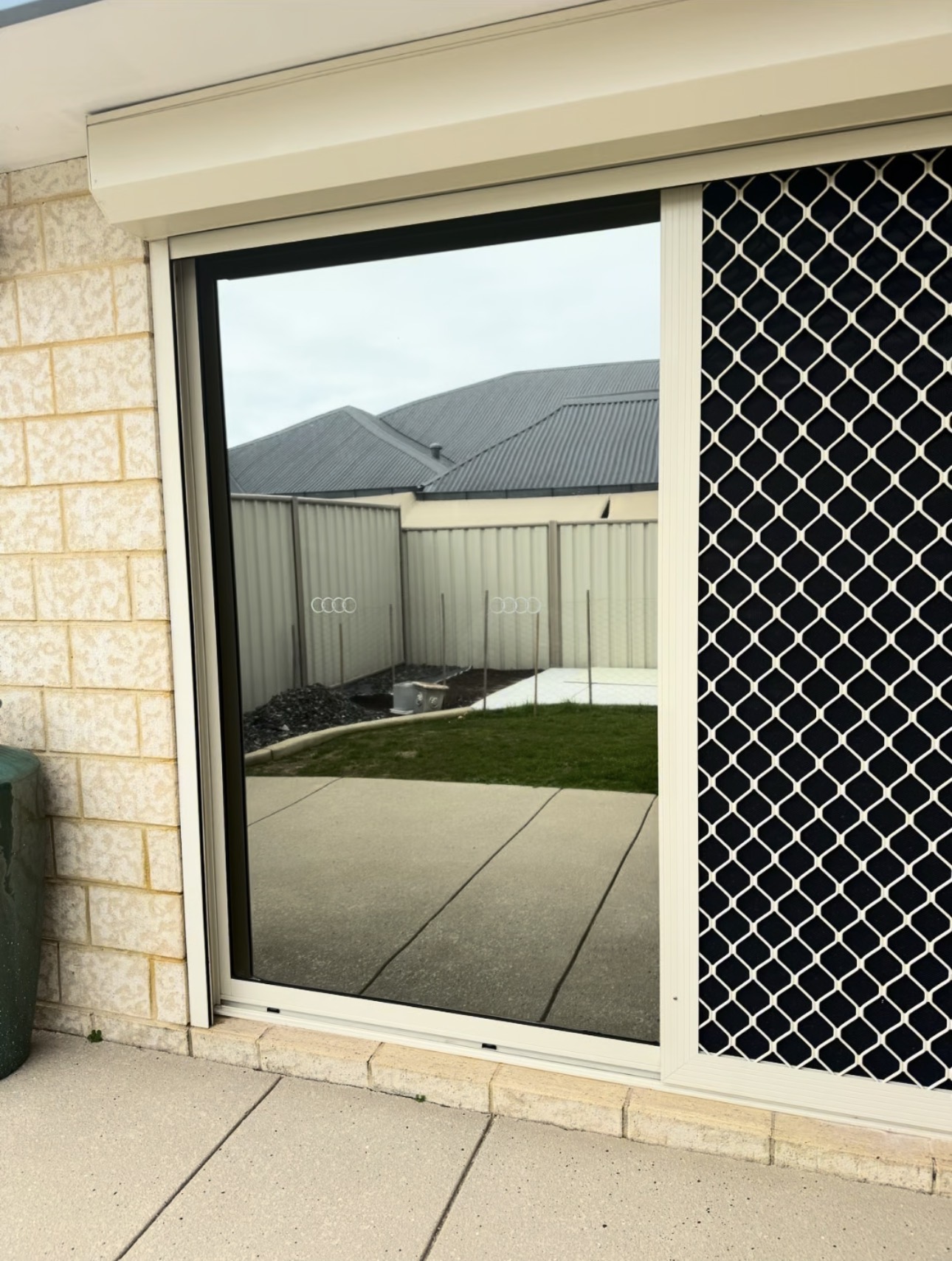
Best for: street-facing lounge rooms, sliding doors, living areas that get afternoon sun.
Watch out for: night reversal, and the mirrored look from the street, which some people love and some don't.
2. Dark non-reflective (charcoal) film
These films look like a smoky dark tint rather than a mirror. During the day they still give you that "see out, not in" privacy. Just a little less than a reflective film, because there's no mirror finish to bounce the view back. They also cut glare and heat, and the darker the shade, the harder it is to see in. Like every tint that isn't frosted, they don't give privacy at night once your lights are on.
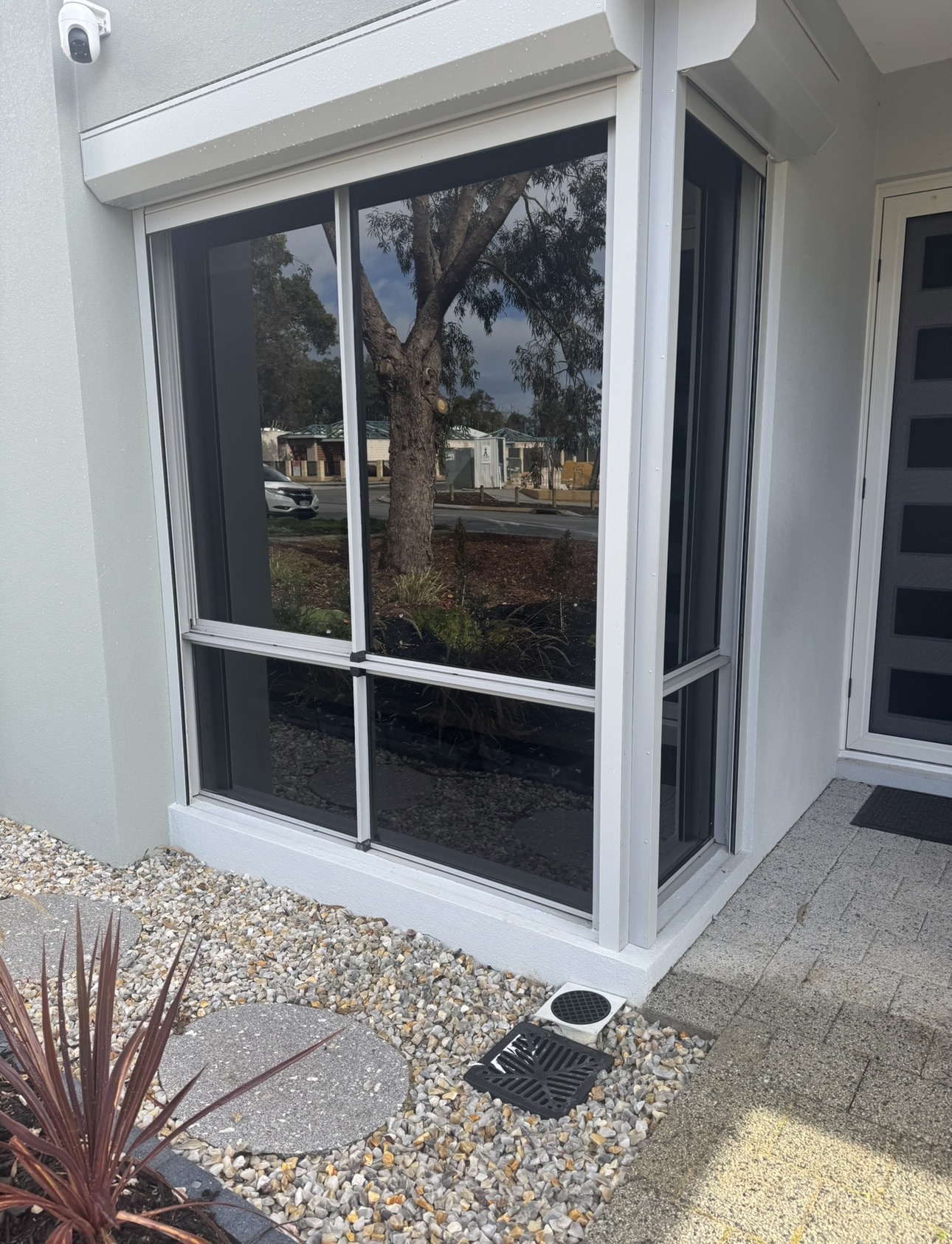
Best for: people who want daytime privacy with a softer, less mirrored look from the street.
Watch out for: darker absorbing films can be unsafe on some glass types (more on that below).
3. Frosted film
Frosted film turns clear glass into a sandblasted or etched look. Light comes through, but shapes are blurred. Because it doesn't rely on a light imbalance, it works exactly the same day and night.
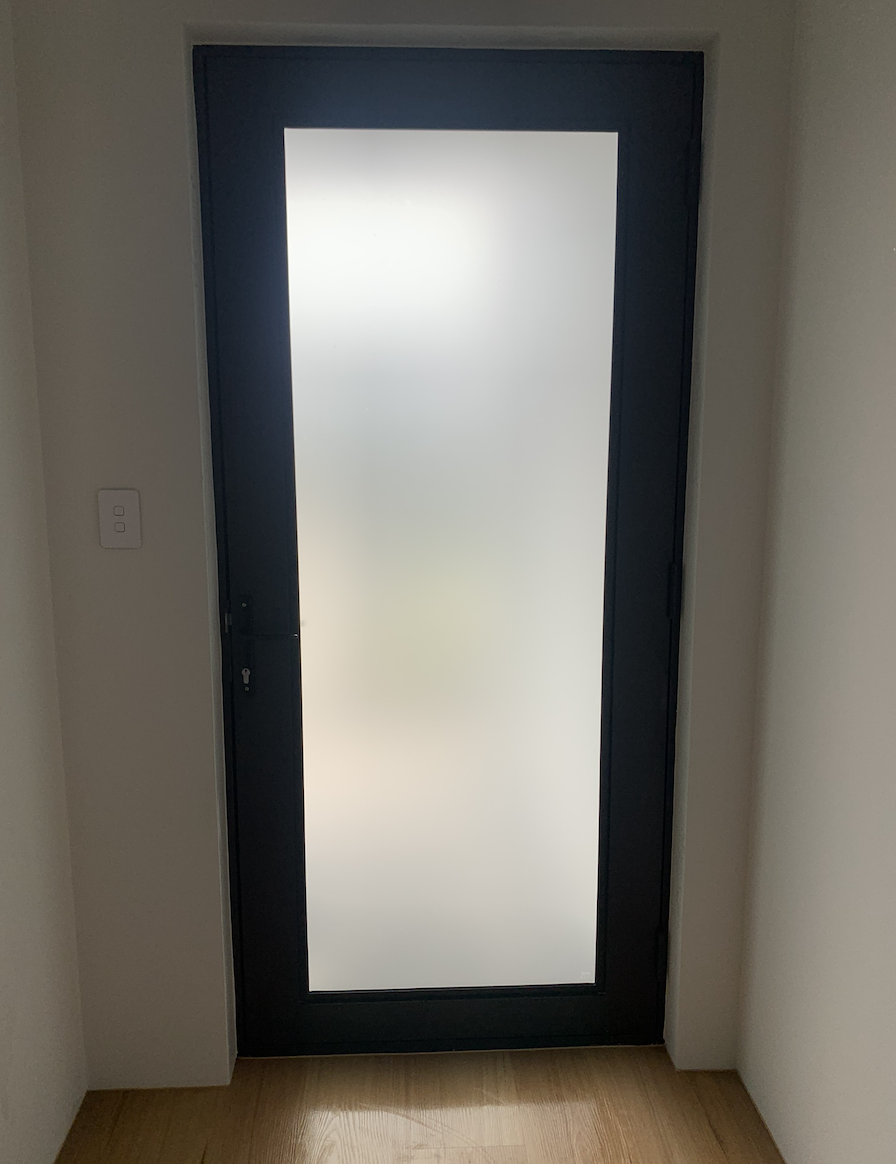
Best for: bathrooms, ensuites, front door glass, toilet windows, bedrooms facing a neighbour's window.
Watch out for: you lose the clear view through that pane, so it's not the pick for a lounge room with a view you love.
4. Decorative film
Decorative films go well beyond plain frosted. You can get patterned and cut designs, gradients and stripes, architectural textures, and glass-look finishes like reeded, reeded frosted and fluted, which copy the look of expensive textured glass for a fraction of the cost of replacing it. Most decorative films blur or break up the view rather than relying on light, so they give privacy day and night. How much privacy you get depends on the design. A solid frosted or reeded finish hides almost everything, while an open pattern leaves gaps. A frosted or reeded band at eye level is a popular way to keep a view and still stop people looking straight in.
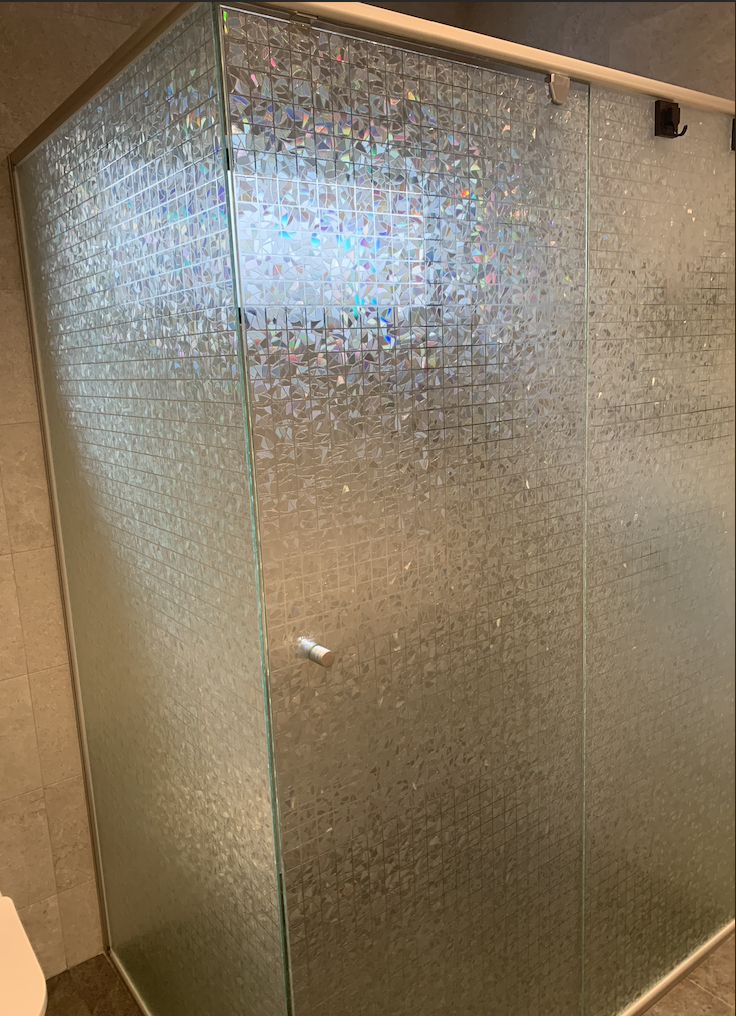
Best for: modern homes, front door glass, sliding doors, home offices, glass balustrades and partitions.
Watch out for: patterns can date quickly. Good film lasts for years and removing it costs time and money, so choose a design that suits your home long term, not just this year's trend.
Privacy film comparison: which one actually works?
On a phone, swipe the table sideways to see every column.
Film type | Day privacy | Night privacy | Keeps view | Heat cut | Best for |
|---|---|---|---|---|---|
Reflective (one-way) | Strong | No | Yes | High | Lounge, living, sliding doors |
Dark non-reflective | Good | No | Yes | Medium to high | Bedrooms, media rooms |
Frosted | Full | Yes | No | Low | Bathrooms, front doors, toilets |
Decorative / frosted band | Full where frosted | Yes where frosted | Partly | Low | Sliding doors, offices, modern homes |
Want to see these films on your own glass before you decide?
Which privacy film suits which room in a Perth home?
The right film depends on the room, which way the glass faces, and when you need the privacy. Here's how we usually approach it on a typical Perth or Peel Region home.
Street-facing lounge rooms. Reflective film is usually the winner. You get daytime privacy, you keep the view out, and these rooms often cop the afternoon sun, so the heat reduction is a big bonus. Close the blinds at night and you're covered.
Bathrooms and ensuites. Frosted film, every time. You need privacy at night more than anywhere else in the house, and you don't need a clear view out of a shower window. Light still comes through, so the room doesn't feel like a cupboard.
Front door glass and sidelights. Frosted or decorative film. People stand right at this glass, often at night, and they shouldn't be able to see down your hallway.
Bedrooms facing the neighbours. It depends on how close they are. If the windows look straight into each other, frosted or a frosted band is the safest call. If it's more about the street and daytime naps, reflective film plus night blinds works well.
Sliding doors to the alfresco or backyard. This is one of our most requested jobs. Reflective film keeps the view to the yard and stops the neighbours' second storey from seeing in during the day. A frosted band at eye level is a good extra if you're overlooked.
Home offices. Reflective or decorative film, depending on whether you want to see out. Film also cuts screen glare, which you'll notice on video calls.
Does my glass type matter for privacy tint?
Yes, a lot. The wrong film on the wrong glass can crack it. This is the part DIY kits and some installers skip, and it's the part that matters most.
Glass with film on it gets hotter in direct sun than untreated glass. The Your Home guide notes that industry guidelines must be followed to avoid thermally induced cracking, and recommends using an accredited window film installer for exactly this reason.
Here's what that looks like in practice:
Annealed glass (standard glass in many older homes and windows) can crack if you put a dark absorbing film on it in strong sun. On annealed glass we use reflective films instead, which push the heat back out rather than soaking it into the glass.
Toughened glass handles heat stress far better and opens up more film options.
Double glazed windows need extra care because heat can build up between the panes. In most cases we only use specific exterior films on double glazing. We cover this in detail in our upcoming guide to tinting double glazed windows.
Low-E glass already has a coating, and some films are not compatible with it. This needs checking before any quote.
That's why Blake checks the glass type on every single job before recommending a film. If someone quotes you over the phone for "privacy tint" without knowing what glass you have, ask them how they know it's safe.
Not sure what glass you have? We check it on site as part of your free quote.
Can privacy tint also cut heat and UV?
Yes. Reflective privacy films are some of the best heat-rejecting films available, so in Perth you're usually solving two problems at once.
Windows are a huge source of heat in summer. The Your Home guide says up to 87% of a home's heat gain can come through windows, and that some films can halve a window's solar heat gain. It also points out that east and west-facing windows are the biggest problem, which is exactly where most Perth homes cop the worst of the afternoon sun.
The films we install cut heat by up to 83% and block up to 99% of UV, depending on the film chosen. That UV part matters more than people think. ARPANSA notes that most plain window glass still lets through about 60% of UVA. That's the UV that fades floorboards, couches and curtains. Cancer Council Australia also notes that the risk is higher for people who spend long periods close to a window that gets direct sun.
One honest trade-off: frosted film is about privacy, not heat. If a bathroom also cooks in the afternoon, there are combination options, and we can talk you through them on site.
How do you choose the right privacy film? 5 steps
Write down when you need privacy. Daytime only, night only, or both? This one answer rules out half the options.
List the rooms and which way they face. West and north-west glass in Perth needs heat control as well as privacy. South-facing glass usually doesn't.
Decide how much view you want to keep. Full view means reflective or dark film. No view needed means frosted. Somewhere in between means a frosted band or decorative design.
Find out your glass type. Annealed, toughened, double glazed or Low-E. If you don't know, that's fine. A good installer checks it on site.
See samples on your own glass. Film looks different in a showroom than it does on your west-facing slider at 4pm. Always look at samples in your actual light before you decide.
DIY privacy film vs professional install: what's the difference?
DIY film from the hardware store is cheaper upfront, but it usually costs more in the long run. A good chunk of our jobs are removing someone's old or DIY tint and doing it properly.
The common problems with DIY privacy film are bubbles, peeling edges, visible gaps, dust trapped under the film, and the wrong film on the wrong glass. Most DIY packs don't mention annealed glass or thermal stress at all. And DIY film normally comes with no installation warranty.
A professional install gets you film cut and fitted to the exact glass, a glass type check, and a proper warranty. At Coastal Tints, residential interior installs come with a lifetime manufacturer warranty for as long as you're the original owner in the property, plus our own workmanship warranty. Full details are on our terms page.
As one of our clients, Geovane A., put it after his install: "I've already noticed a big difference in heat reduction and privacy inside the house, which makes a huge improvement in comfort."
What does privacy window tint cost in Perth?
It depends on the film, the size and number of windows, the glass type, and access. Our current pricing for home tinting starts from $85 per square metre installed, with a 3 square metre minimum, as listed on our website. Specialty films for double glazing or Low-E glass cost more. The only way to get an exact number is an on-site measure, because the glass size on plans is usually a bit different to the real glass.
We'll cover real price ranges in more detail in a separate guide on what privacy tint costs in Perth.
Why Perth homeowners book Coastal Tints for privacy film
Coastal Tints is owner operated. Blake McIver founded the business and does every install himself. No subcontractors, no junior installers. He has more than 10 years of hands-on experience in New Zealand and across Australia, including Melbourne and Perth, and is an authorised dealer and installer of SolarGard and UltraGard films.
We're based in Mandurah and cover the whole Peel Region with no call-out fees, plus the Perth Metro area. We come to you with film samples, check your glass type, and send you a clear quote. No pressure, no hard sell.
Sick of living with the blinds shut?
Book a free on-site quote. Blake will check your glass, show you real samples in your own light, and tell you honestly which film will give you the privacy you're after.
Privacy window tint FAQ
Does privacy window film work at night?
Reflective and dark films do not give privacy at night when your inside lights are on, because the inside becomes the brighter side and the mirror effect flips. Frosted and decorative films work day and night because they blur the view instead of relying on light. Many Perth homes use reflective film for daytime and close blinds at night.
Can I still see out of privacy tint?
With reflective and dark films, yes. During the day you see out clearly while people outside see a reflection or darker glass. The view looks slightly tinted, a bit like wearing sunglasses. With frosted film you can't see out clearly, but light still comes in. A frosted band gives you a mix of both.
Will privacy tint make my house dark?
It doesn't have to. Films come in a range of light levels, and many reflective films keep plenty of natural light while still giving good daytime privacy. Most clients find their house feels brighter afterwards, because they can finally keep the blinds open during the day. Always check samples on your own glass before choosing.
Is reflective privacy tint allowed on homes in WA?
Rules can differ depending on your council, estate covenants, strata by-laws, or whether you rent. If you're in a new estate, a strata complex or a rental, check your covenant, by-laws or with your landlord before installing a reflective film on street-facing glass. We'll be covering rentals in a dedicated post once we've confirmed the details with the right WA sources.
Can privacy film be removed later?
Yes. Window film can be removed if you move, sell, or want to change products. It's a labour-intensive job, and the cost depends on how many windows there are and how old the film is. If you're upgrading, we can remove the old film and install the new one in the same visit.
How long does privacy window film last in the WA sun?
A quality professionally installed film lasts many years, and residential interior installs with Coastal Tints carry a lifetime manufacturer warranty for the original owner. Cheap DIY films tend to bubble, peel or fade much sooner. Cleaning with a soft microfibre cloth and mild soapy water, and avoiding ammonia-based cleaners, helps your film last.
Can you put privacy film on double glazed windows?
Often yes, but only with the right film, usually applied on the outside of the glass. Putting the wrong film on double glazing can cause heat stress and damage the unit. This is why the glass type needs to be checked on site before any film is recommended.
How long does privacy film take to install?
Most homes are done in a day, depending on how many windows there are. After install, the film takes about 2 to 4 weeks to fully cure. You might see small water pockets or a slight haze during that time. That's normal and clears up on its own.
Still not sure which film is right for your windows?
Every home is different. Blake will come to you, check your glass type, and show you real privacy film samples in your own light, so you can see exactly what it looks like before you decide. We cover Perth to Mandurah and the Peel Region in Western Australia, with no call-out fees across the Peel Region.
Got a quick question first? Contact us
Sources
Australian Government, Your Home: Glazing
Cancer Council Australia: Tinted windows
Window Film Depot: How one-way mirror tint works
Coastal Tints: Services, pricing and warranty and Terms and Conditions